Showing posts with label drawing. Show all posts

Saturday, August 4, 2018

How do I draw from just my imagination?


Here are two approaches to drawing: Make something as much like an image from life as possible, and Make something that doesn’t exist outside of imagination.

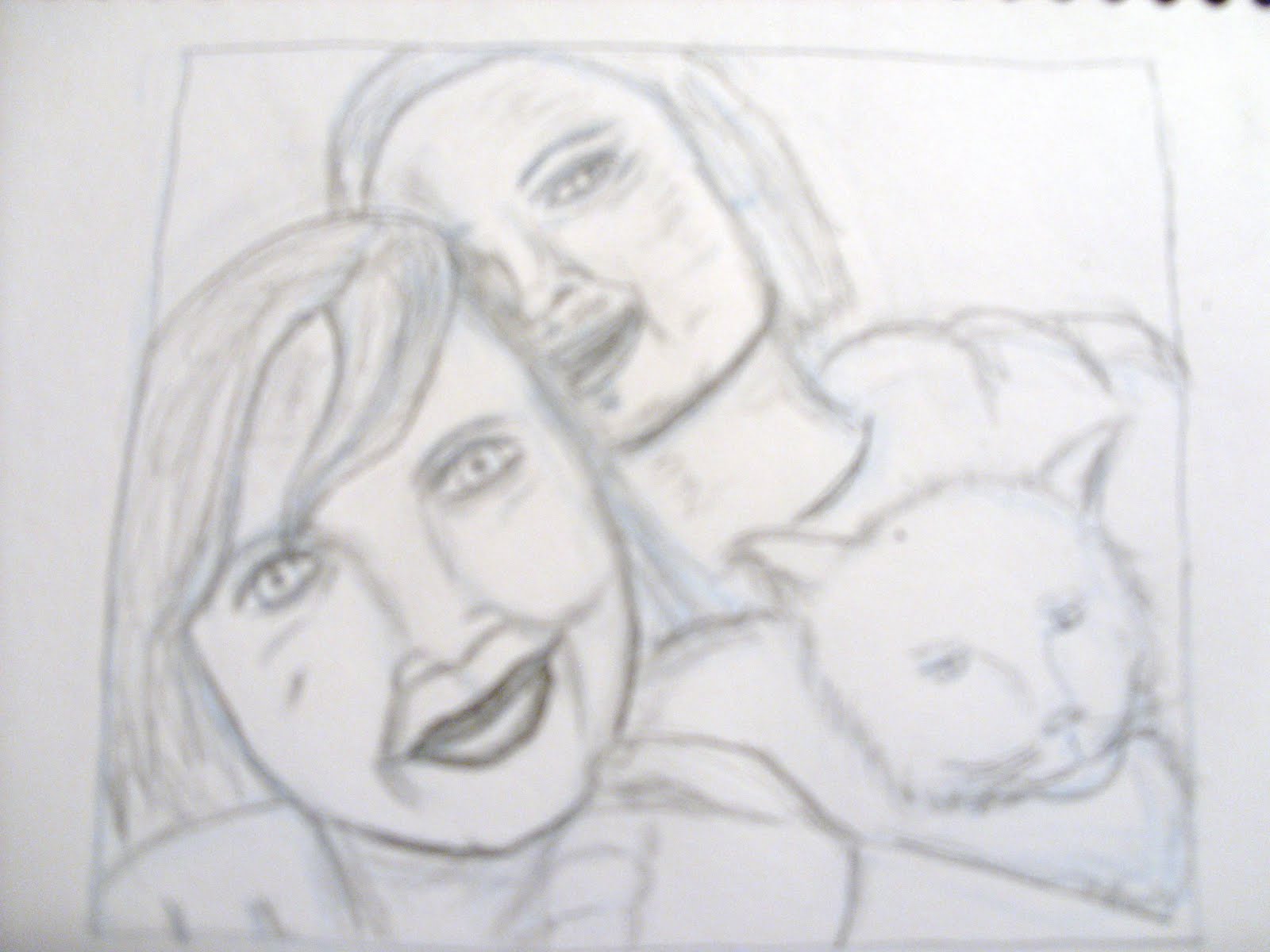
Here is The Marc Kane, with an old sketch of us with our friend Jamison, the first day we ever hung out.
There were no pictures, but she had a strong picture in her mind. She uses realistic elements, but an imaginative style (1998), drawn from her vision.

Here's a still life nature drawing that uses mostly elements as they were layed out to my eye, and some arranged by my imagination.

Now, cartoonists often use an approach that works down the middle. They draw often simplified versions of real things, like cars, trees, animals, and might merge them with images that are not entirely realistic.

It’s a matter of style.
If you want a photo-realistic style, work from still life and photographs. Your question, however, suggests you’d like to try something without reference.

Sometimes, a masterful vision involves a perspective that is very difficult to attain or pose. The first one is Lewis Trondheim, illustrating Poppies of Iraq.
Jim Steranko, Steve Ditko, Paul Smith, Peter Max...I'm trying to remember who did the William Carlos Williams tribute...it's driving me nuts. I'll include Renoir, here, an Impressionist who used oil to make the color impression, used depth...but did not slavishly limit things in lines. Real people and flowers don't have thick lines around them at their limits, after all.

Depending on the story, or your tastes in portraits, you might like one of these over the other:


This last one, Rackham, drew things purely from imagination. INspired somewhat by nature, but super-normal, as Mattheson once put it.

You really have to ask yourself 'what's my purpose, this time out?' Sometimes, you are simply out to discover what's inside. In that case, decide how you feel about it later. What are you asking of your vision: what's your vision look like? Developing that sense of inner vision is the ultimate creative goal.

Do you want something never seen in real life? Mojo here, an Arthur Adams visual design, is an exaggeration of feelings we know all too well: what does his face tell you? What kind of world do you think he inhabits?

Yildiray Cinar, here, illustrates something unreal, but lights and crafts it in a way that lets it exist powerfully within its own reality.

Youka here, by me, was inspired by a real person. I wanted to express her warmth. I used a photograph- but she also represents a fictional character of mine.
Now this pencil drawing, including a mirror image, was inspired by real life model Max Wasa and her love of Dr. Who. But the vision came from my head, rather than copying a photo of anything.

Here, Emmryza DAwn, who you can find under the name, The Marc Kane, used a small book to sketch this image based on real life, but drawn from her vision- from purely her imagination. She is much stronger at this quality, in my opinion, than I. I can capture many loving details, but I never get to draw long enough to really develop an ability that comes naturally to her. It's a self-imposed, or predisposed, limitation.


HEre is a still life. I didn't use a medium I could erase, and my figure moved quite a bit. You can still get a sense of the real person.

This was made with no planning, really, to go in a Christmas card. NO photo reference, but, the style was done to evoke an effect (funny, I hope).


I will be honest with you: reference is great. IF you want to draw a real person or object, it’s best to start with basic layout, a stick-figure type underpinning, then add details. You might even make a cartoony style to represent these things, in which case you change details such as proportions. Mastery of realistic anatomy is a great start to drawing perspectives that seem to bend the rules.

When you say you ‘can’t draw without reference,’ what you literally mean is, you don’t like the results. They don’t satisfy your need to represent the subject in question.
So my advice is two-fold:
1. Learn to like what you make up from your head. Don’t expect it to be completely realistic. Let art take you on a journey: discover your imagination. Let your art represent things that have never been, in styles we don’t see in day-to-day life.
2. If you are still getting the basics down and want the option of being realistic, nothing replaces a good book like, Bridgeman’s anatomy guides, or a book by Burne Hogarth, or some other classicist. (Classicists are people who draw with realism in mind, primarily. Experientalists are on the opposite side of the wheel: they want to express states of mind and emotions, fantasies of form.) Practice drawing body parts with classic style; practice shading solid objects. There’s no replacement for practice, when it comes to producing these things from your mind. Conversely, there is no substitute for letting your mind flow- let go of the need to match a realistic standard and discover how to express yourself in your own style. I really recommend looking at ARt History and seeing the different approaches. You will see how artists uncovered secrets of perspective, especially in statuary, long ago- yet new movements arose that represented reality with different values than solid realism.

Be Chill, Cease ill

Monday, September 10, 2012

Drawn to You


“Drawn to You” Fantasies


The impressionist colors of dusk across downtown San Diego washes over buildings calling back to different times, from horse-drawn saloons to bubble-driven condos. Jack Pilot watches the young women of every size and shape and color, many in their best try at the latest styles, as he strides the four-way crossing on Market Street and Fifth Avenue, with five seconds left on the walk light. Lots of men like himself---almost always dressed more simply, a reverse of the coloring of most animal genders---also crowded the crosswalk, some with dates, others with the boys, some looking for whoever the Gaslamp’s many bars might bring before the morning comes. Jack contents himself with what is there to take for free, the passing beauty possessed by no one particular, found everywhere, sometimes concentrated in a photogenic stand out in heels, or some model-tall waif in effortless shoes chosen for a comfortable stroll along the bar crawl. Images: so many more than memory can keep, raising the spirit in doses like bursting sunshine, some calling for repeated reflection…but all moving too quickly to sketch.


Jack likes to sketch, all ages, all walks of life. His fondness for pretty girls, those calling him to meditate on beauty, occasionally produces a drawing wrought quickly enough to go into the hands of the girl herself.

Giving a girl a picture had not come easily to Jack Pilot; he had to come out of the fantasy of enjoying her looks to really say something. Even then, he rarely offered a phone number or e-mail address. Once or twice this got him a date. The risk of getting shot down mattered less to him now, or rather, he began to embrace it. If he was willing to give his time and talents away for the chance to talk to the girl, what could it hurt, really? If only one could tell when the woman…when any person…is open to approach! He began to realize he would be able to tell from observing his subject ---in the time it takes to draw someone, you get a sense of your chances to really talk.


One day, he thinks, a drawing will draw someone to him.
Somewhere along the way, he’d kept company with a friend who would not be proud of himself, had taught him not to be proud of himself…Jack had so many wrong ideas based on the rather ordinary and common notion of how distasteful most things in life were, while a few things stood out as completely cool, and always done by someone else. Youthful smartass humor, with some reserve about the quiet dignity of honesty and the occasional selfless deed, bonded the friends, and eventually Jack began some serious work on finding himself, who he would be, what was he interested in giving constructive attention. Jack started drawing again after leaving college depressed, drew his way out with a funky dose of Prince’s two cd singles collection and some Replacements he found, living like he was cool enough to be something at least he liked.

Never believing in himself afforded a lot of time for daydreams of escape, but he needed a plan of his own. His love for comic books, his dip into the history of art, and just a bit of approval for himself generated from him one drawing after another, with many still promising to be good even on the journey to building fundamentals, just, with the pencil or pen, to say anything at all. Fundamentals didn’t occur to him for a long time: just drawings of energy, really, shapes at which he would not fail, without respect to realistic rules, just as he lived. He didn’t, after all, expect to do anything realistically well; he just wanted to live in peace with his dreams, and maybe, by little plan of his own, he would get lucky and enjoy a life of his own. So often was he captivated by his speeding mind’s array of questions in a world where many supposed rules and simplifications were, to his skeptical light, suspect, and still he prepared for the process of finding out which things said to be wrong for you are the best, and in what way, and for how long. Once compliments came his way for what he drew around people, he wanted fundamental improvement in rendering things with the illusion of reality.

Still, even if he was disappointed to be disappointed in his efforts at times, there was something good in any day where he drew. Drawing takes a connection. AT the gate of grander ambitions, he served away, sometimes with common objects, sometimes conveying a mood, but always discovering a kind of loving in his lines, their work together, the worshipful concentration upon an image. He always worked somewhere for little to no money, but he learned to stop worrying and simply draw. In this Jack found an achievement which called for awareness in the moment.


There's a lot more in mind, and considering the direction I began with in mind, this may be all I can share here. I actually started with a more humorous, even bizarre idea, but along the way the more introspective mood of my day asked something different first, so I hope you enjoyed. There's probably a novel in this...maybe one that didn't require TOO much research? LOL

Tuesday, January 31, 2012

How to draw, and WHY draw: Face to Face


I love drawing. I didn't do it very well for a long time, and I can still make some pretty decent mistakes, but drawing has brought me so much peace in my life. It's an activity you can do, putting aside whatever else is on your mind. It doesn't matter who draws better than you. It doesn't matter if you show it to many people. You could fill a lot of free time practicing its basics; that was the step I missed for a long time!

When you draw a person or character, you spend the time thinking about your subject. With each line---with each correction---the subject stays on your mind. You focus on providing the image with all it needs: its eyes, nose, ears...shading. When you erase and improve, you think of helping the image along. You have to be patient with yourself. You can enjoy the thoughts surrounding your subject, think of its essence. You can consider the drawing from different angles, turn it upside down; you can put your subject in any position you can imagine, or just faithfully bring a photograph to life!

If there's no energy left over for anything else, a blank page and your pencil are all you need to improve some tiny part of yourself. To really get the knack for drawing heads, for example, you should try ovals, over and over again. Heck, I should take some time today to do the same!


Let's say all you have handy is a pen: why not play along, anyway! Do you want it to look more like the person you had in mind? Was the anatomy a bit shaky? If there's something you want to correct, you can always try re-drawing it. You may really like the style of a drawing, even if it doesn't conform to the exact image you had in mind. The ideal is to let the drawing---the process of drawing---put you in touch with the essence of who you are drawing. All the time you spend on your image, you spend partially on the technical matters of placing this here, and this, like so; enjoy thinking about what who you are drawing means to you, what are they like---what is this person's life like? You don't have to concentrate on you, or your mistakes: make it about your subject. Take your mind off your self; let your time become the image.


Maybe you think you will never have the time to become really good at it---but I encourage you to put that aside. Do it for the sake of the task itself. It's just a mark at a time! Spend as little time erasing as possible. Start a new drawing as many times as necessary!

It's just: decide what face you want. You will find yourself trying the many expressions of human emotions. It's a great way of concentrating on a person you like, or even one you are trying to understand. Decide who you're drawing, then start up with an oval. Draw a soft line down the middle, where the nose is, then try another line across where the ears will be; that's where to put your mouth, too. Your eyes will be one eye apart in width, on most humans. They're positioned parallel with the tops of the ears, too.

Maybe you want a simple approach; I've told you all you need, here. It's the spirit of what you do that matters; see it for the fun of doing it, rather than worrying over the result. Just draw!

Just draw.

These drawings courtesy the Marc Kane, aka Angela Dawn. Here's my version:

It was a great way to spend some time thinking about my cousin Melinda...maybe it will make her happy, see her own beauty of spirit.


Thursday, August 4, 2011

If you start a drawing right, it goes rather well


Here I've included my under drawings. They set up the rest of the effort. It's much less frustrating when you lay out your major objects. You could practice doing ovals and marking them for eyes, nose and mouths a couple of hundred times.


I'm not saying, don't complete anything in between, but you won't be satisfied with what you come out with until you figure out where everything fits. Feel free to erase it, but as Joe Phillips taught Lue, use the drawing end of the pencil as much as you can!


Marc Kane:

My drawings started out like Cubist or Egyptian drawings: they lacked depth. Occasionally I was making up the anatomy as I went along, because back then it was more trouble getting photographs; we had to pay to develop anything we took, so between that and the film, it wasn't economical, like it can be today if you are fortunate enough to have a camera in your phone (and fortunate enough to have a phone! Many misunderstandings could've been cleared up with a simple text in those days).


When Lue began drawing, he tried imitating other people's drawings first. Now, we know that isn't the best way to progress. You can measure and copy angles, but they are very difficult to put together. He didn't have much confidence because he didn't practice much, and this makes all the difference.


Look at this. Can you see yourself able to draw this? It's not so intimidating, in its simplest form. With time, you can fully realize your drawings, but start with the achievable and discover the possible---in the very place you thought impossible before.---Lyron


You will like what you get more and more if you appreciate every step forward you make. You may not find yourself back at that level when you start the next day, but if you keep drawing you will find yourself advancing again, looking for new challenges.


The under drawing is the part most people leave out.